Journal / Lighting
Bathroom lighting ideas, and the rules around water
Words by the Bathroom Edit editor · Updated on 9 October 2026 · 4 min read
Good bathroom lighting comes in layers: light on your face at the mirror, a soft glow for night, and daylight when you can get it. And around water, the wiring rules decide where things can go.
Light the face from the front at the mirror, add a low glow under the vanity or in a niche for night, and bring in daylight. Keep switches and power points out of the restricted zones around the bath, shower and basin.
1. Light the face
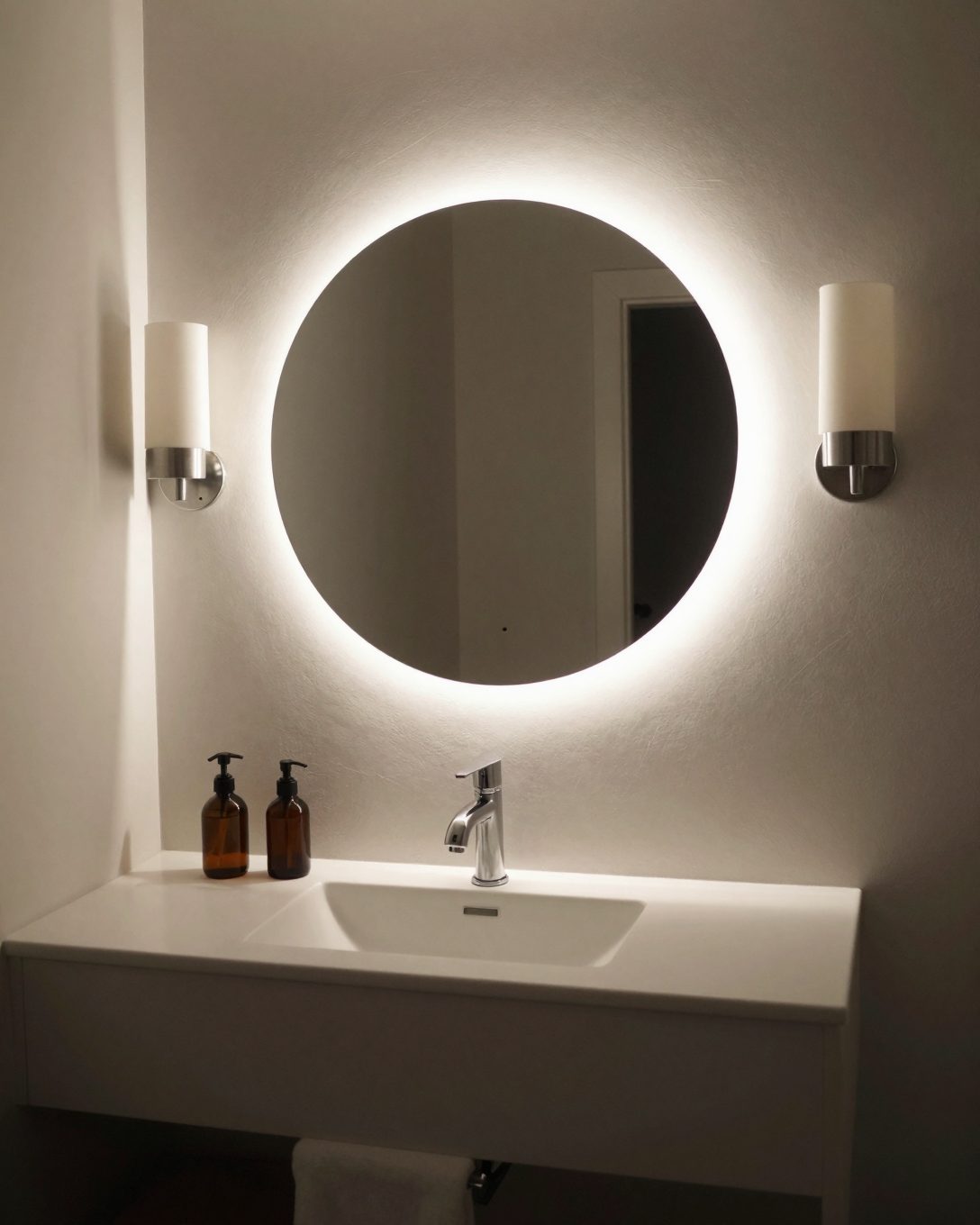
Spec board
- MirrorBacklit round
- SconcesEither side at face height
- ColourWarm white
- SwitchOutside the wet zone
- FinishBrushed brass
A downlight above the mirror casts shadows under the eyes. Light from either side of the mirror, at face height, is what designers use.
2. A glow for night
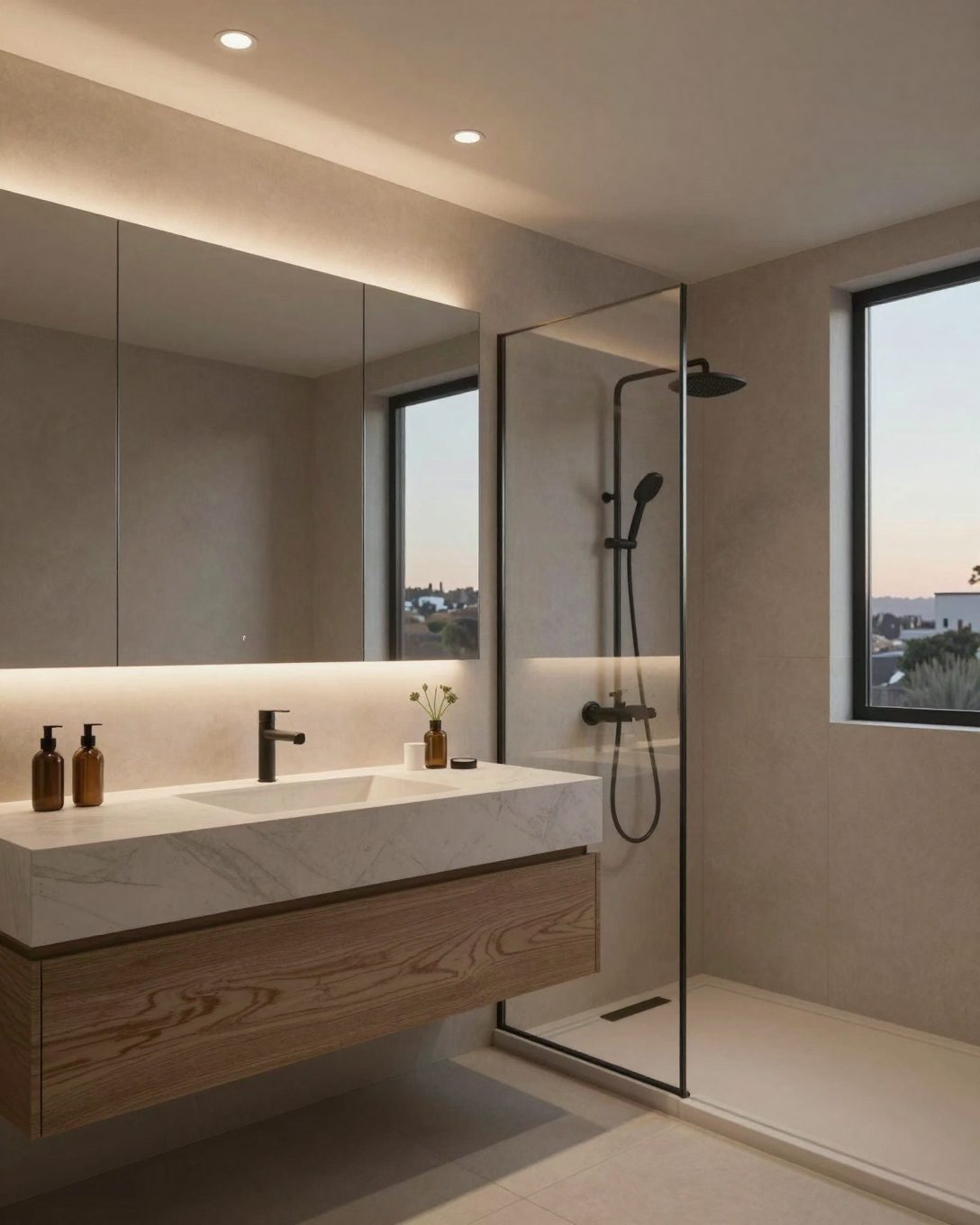
A strip light under a floating vanity or in a shower niche lights the floor at night without waking you up.
3. Daylight
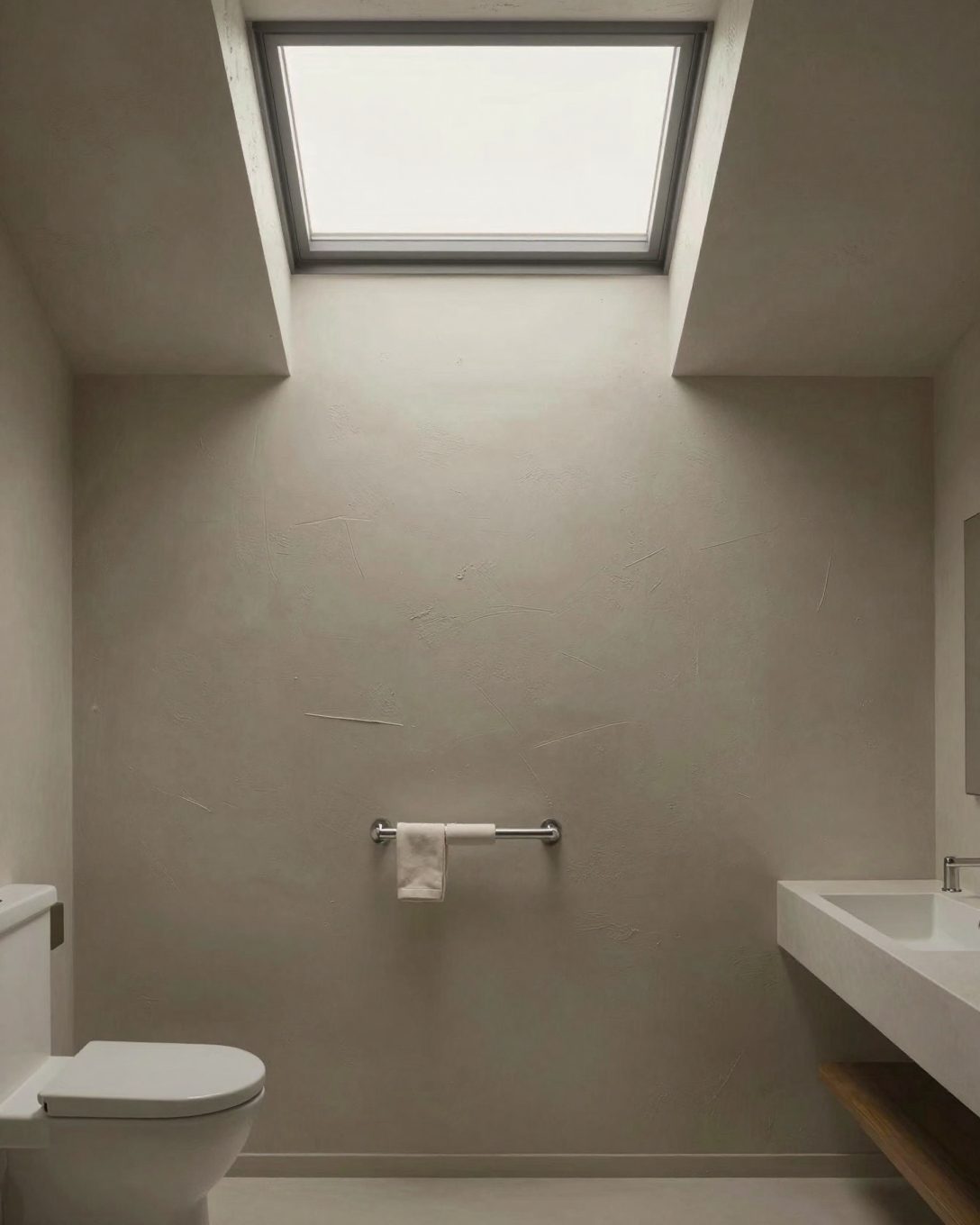
A high window or skylight gives privacy and daylight; this year's award-winning ensuites used skylights. See the 2026 trends.
The rules around water
Australia's wiring rules, AS/NZS 3000, divide the space around baths, showers and basins into zones. In the NSW Government's summary of the rules:
- Zones 0 and 1 (inside and directly around the bath or shower): no switches or socket outlets.
- Zone 2: switches only if at least 0.3 m away and rated at least IPX4; sockets only as a shaver outlet or RCD-protected inside a cupboard.
- The NSW guidance suggests keeping switches about 0.6 m clear of a bath or shower screen entry, and 0.15 m to the side and 0.4 m above a basin, to stay out of zone 2.
These examples come from NSW's advisory note, not a complete lighting-installation specification. An IP rating alone does not make a location permissible: the electrician must check the full zone geometry, clearances, equipment and protection requirements. Bring your lighting plan to them early.
Colour temperature
Warm white light around 2,700 to 3,000 kelvin feels relaxing and flattering, while cooler light around 4,000 kelvin feels brighter and is good for tasks like shaving and make-up. Many bathrooms use warm light overall and neutral light at the mirror, or dimmable fittings that adjust.
Planning the lighting
Plan lighting with the electrician before the walls are closed, so cables, switches and transformers are in the right places. Mark where the mirror, niche and any feature lights will go, and choose fittings with the right ingress protection (IP) rating for each zone.
Lighting the mirror properly
The light at the mirror matters more than any other in a bathroom, because it is where you shave, put on make-up and check your face. A single downlight above the mirror casts shadows under the eyes and chin. Light from the sides, at face height, is the most even and flattering: wall lights either side of the mirror, vertical strips built into a mirror cabinet, or a backlit mirror that glows around its edge. If side lights will not fit, a wide light above the mirror, angled towards the face, is the next best choice.
Lighting a shower
A shower needs bright, even light for washing and cleaning, from a fitting rated for the wet zone it sits in. A downlight with the right protection rating above the shower, or a strip light in a niche, does the job. Avoid placing the only shower light behind where you stand, which leaves your face in shadow.
Night lighting
A low glow at night lets people use the bathroom without switching on bright lights that wake them fully. Strip lights under a floating vanity, a dim setting on a dimmer, or a motion-sensor light at floor level all work. In an ensuite, this keeps a partner asleep.
Daylight
Natural light makes any bathroom feel better. A skylight, a solar tube or a clerestory window brings light into an internal bathroom without losing privacy. Frosted, reeded or tinted glass on windows keeps privacy while letting light in. Light-coloured surfaces and a large mirror spread daylight around the room.
The wet area zones
Australian wiring rules divide bathrooms into zones around the bath and shower, and set what kinds of light fittings and switches can be installed in each, with protection ratings that suit the water exposure. The closer to the water, the stricter the requirements. A licensed electrician must install and certify bathroom lighting, and will choose fittings that meet the rules for each zone.
Energy-efficient lighting
LED fittings use far less power than older halogen downlights, run cooler and last much longer. Choose LEDs with a high colour rendering index so skin tones and finishes look natural, and pick the same colour temperature throughout the room unless you want a deliberate contrast at the mirror.
Our short answer
Layer the light: even light on the face at the mirror, a soft glow for night, bright light in the shower, and daylight wherever possible. Use warm LEDs with good colour rendering, put everything on dimmers, and have a licensed electrician install fittings that suit each wet zone.
Common questions
What is the best lighting for a bathroom mirror?
Light from either side of the mirror at face height, or a backlit mirror, which lights the face evenly without shadows.
How far does a light switch need to be from a shower?
NSW's example uses 0.6 m from the shower-screen entry to exclude the switch from zone 2. Zone 2 placement has additional restrictions, including minimum clearance and protection; IPX4 alone is not permission to put a switch anywhere. Your licensed electrician must determine the zones and compliant position for the actual shower.