Journal / Styles
The Japandi bathroom
Words by the Bathroom Edit editor · Updated on 3 October 2026 · 2 min read
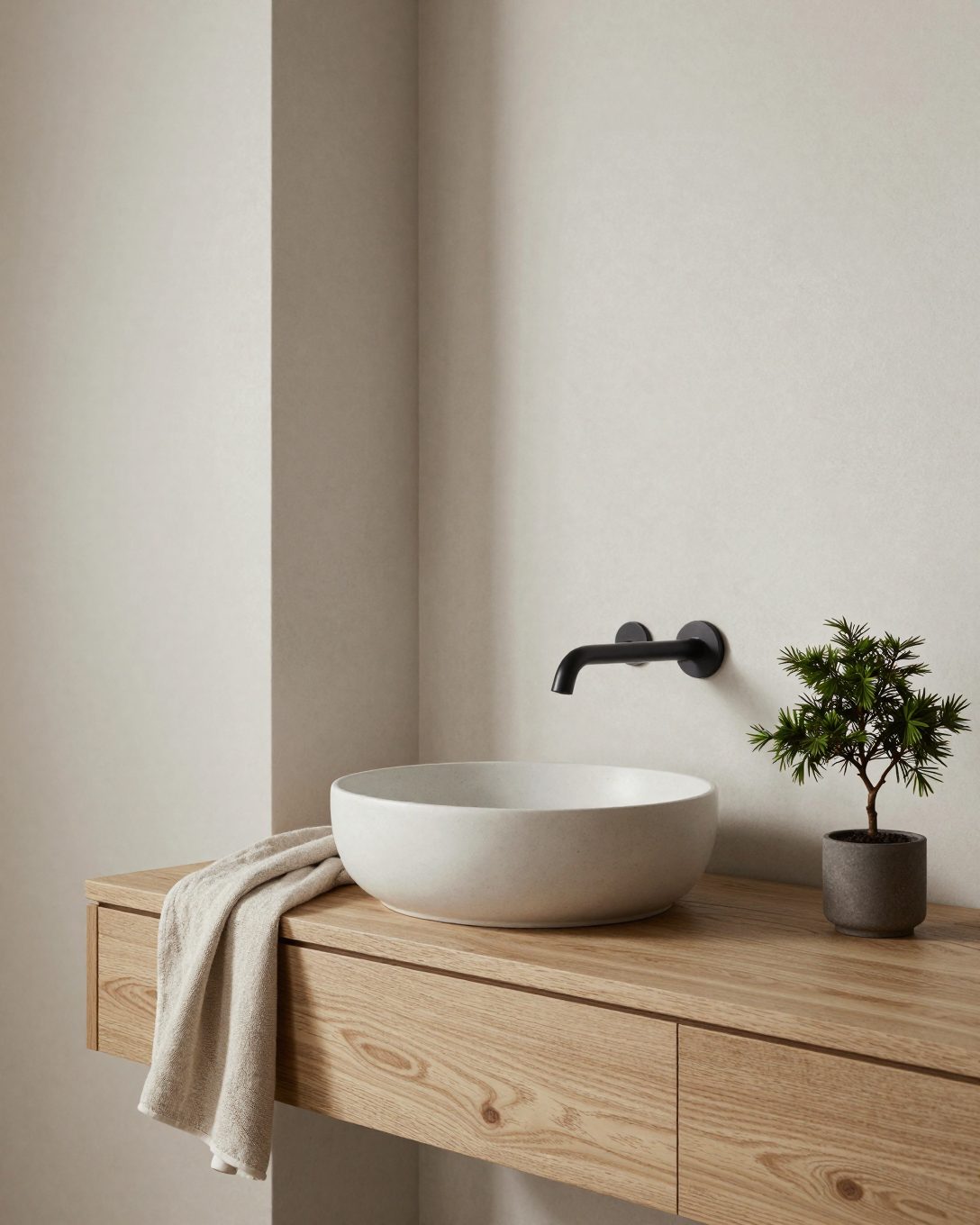
Japandi joins Japanese restraint to Scandinavian warmth. In a bathroom that means pale timber, matte stone, soft plaster and almost nothing on show.
A Japandi bathroom uses light timber, matte white or stone surfaces, soft plaster-like walls and black or brass tapware, with storage that hides everything.
What makes it Japandi
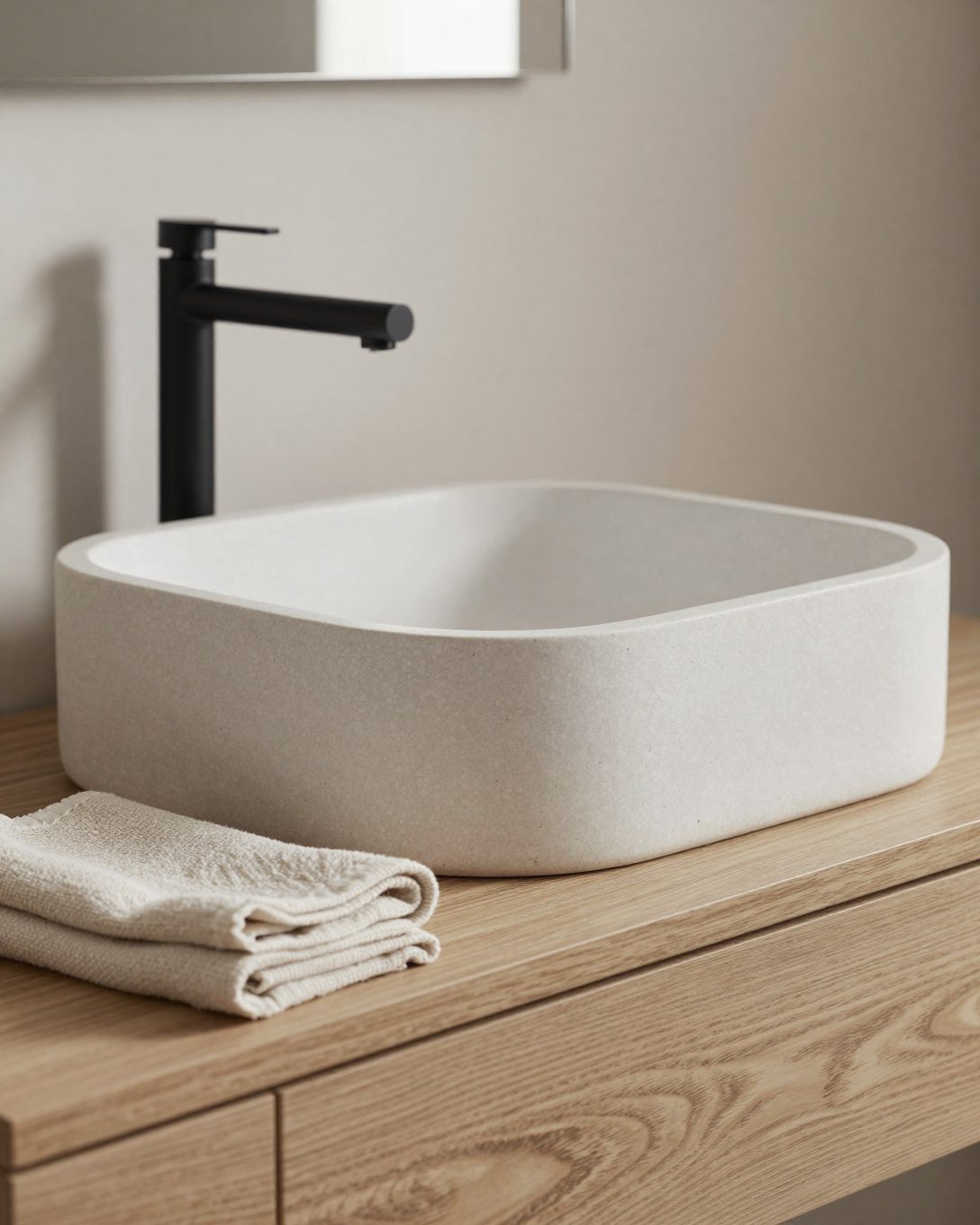
Spec board
- JoineryOak, natural or lightly limed
- BasinMatte stone or ceramic
- WallsPlaster-look finish
- TapwareSlim matte black
- TextileLinen and cotton
- Timber, but pale. Oak and ash, with the grain showing.
- Matte everything. Honed stone, matte ceramic, plaster-look walls.
- Low and long. Floating vanities, low benches and a long horizontal line.
- Nothing on the bench. Mirrored or recessed cabinets hide the bottles.
The shower
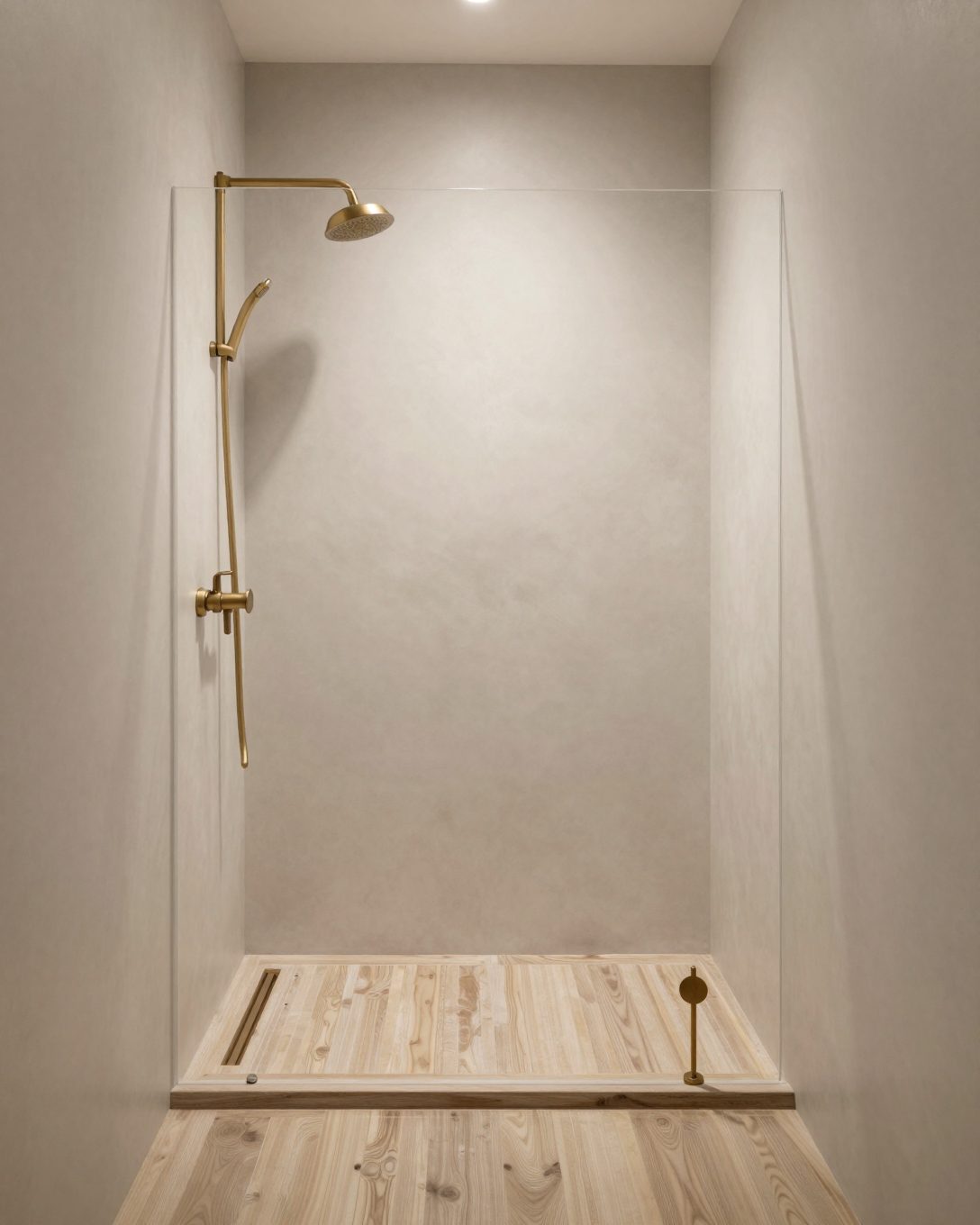
A walk-in shower with timber-look porcelain on the floor keeps the warmth of timber where real timber would suffer. Under Australia's building code, the shower floor and its walls to at least 1800 mm must be waterproof, whatever the finish.
Timber in a wet room
Keep real timber to the vanity and outside the shower, sealed. Use porcelain that looks like timber inside it.
Lighting
Warm, low and indirect: a backlit mirror and a strip under the floating vanity. Switches and power points must stay out of the restricted zones around the shower and basin under the wiring rules, so plan them with your electrician. See bathroom lighting.
Common questions
What colours are Japandi?
Warm whites, oatmeal, stone and pale timber, with black or aged brass as the accent.
Is Japandi still in style in 2026?
Yes: its calm, natural materials are close to the warm, tactile finishes that won this year's bathroom awards. See the 2026 trends.