Journal / Materials
Microcement bathrooms: what designers think
Words by the Bathroom Edit editor · Updated on 3 October 2026 · 4 min read
Microcement is a 3 mm hand-trowelled cement coating that gives a bathroom one seamless surface. It won awards this year. It also has rules.
Microcement costs about $200 to $500 per square metre plus GST to install, according to hipages. It is not waterproof on its own: in a shower it sits over a waterproofing membrane that meets AS 3740, and under a sealer.
What it is
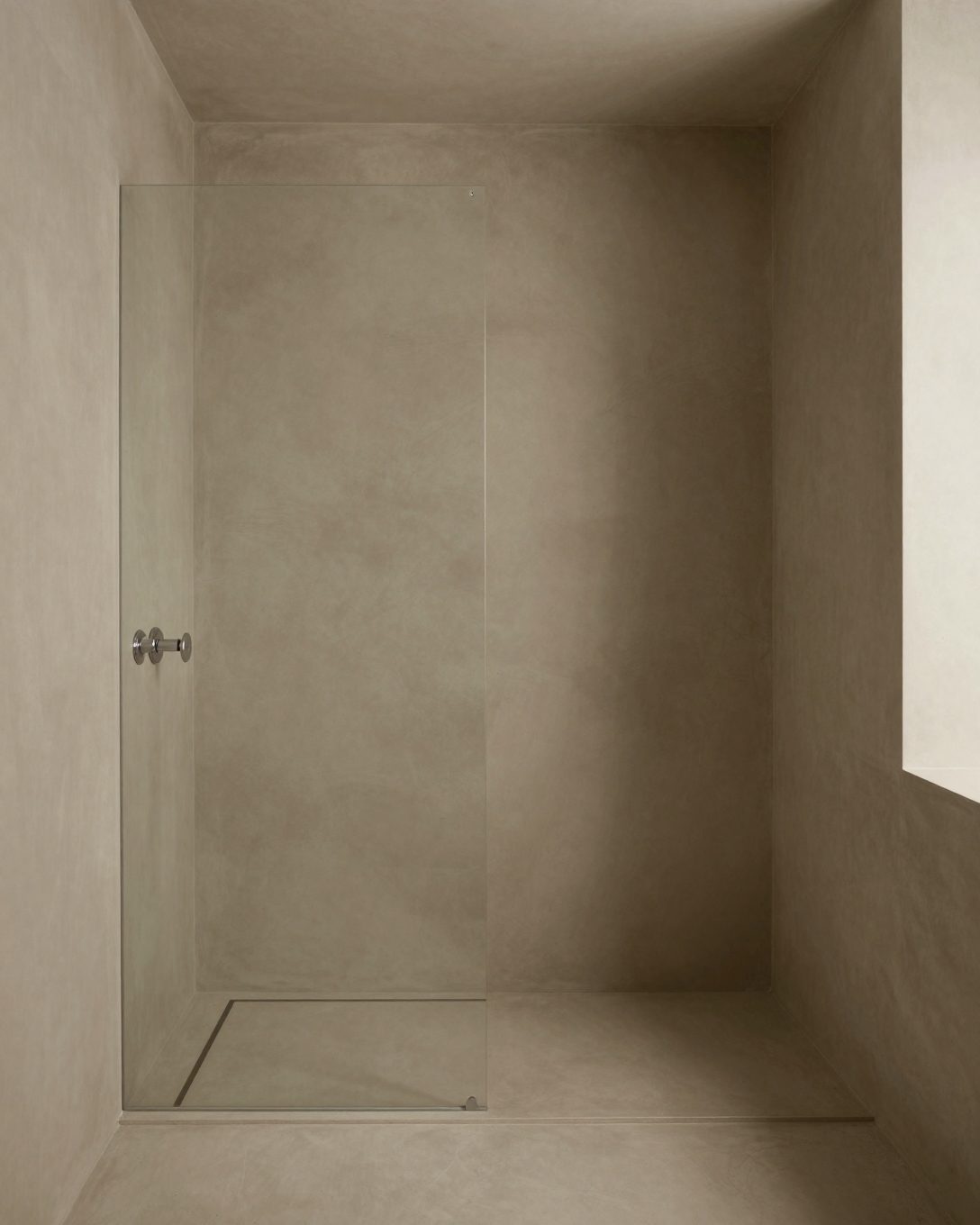
Spec board
- SurfacesMicrocement, warm greige
- ThicknessAbout 3 mm
- Under itAS 3740 membrane
- Over itPolyurethane sealer
- DrainLinear
A cement-based coating trowelled by hand in layers over walls, floors and vanities, with no grout lines. Because it is only about 3 mm thick, hipages notes it can often go over existing, well-bonded tiles.
The yes-buts
- Waterproofing is separate. hipages is plain: microcement itself is not waterproof. The waterproofing comes from a compliant membrane, the layered system and the sealer.
- The installer is everything. Problems usually come from skipped waterproofing, a moving substrate or a poor sealer; never DIY a microcement shower.
- Walls cost more than floors. Corners, fixtures and vertical trowelling push the price up.
- Reseal over time. hipages puts a well-installed microcement shower's life at 15 to 20 years, with resealing as needed.
Where it shines
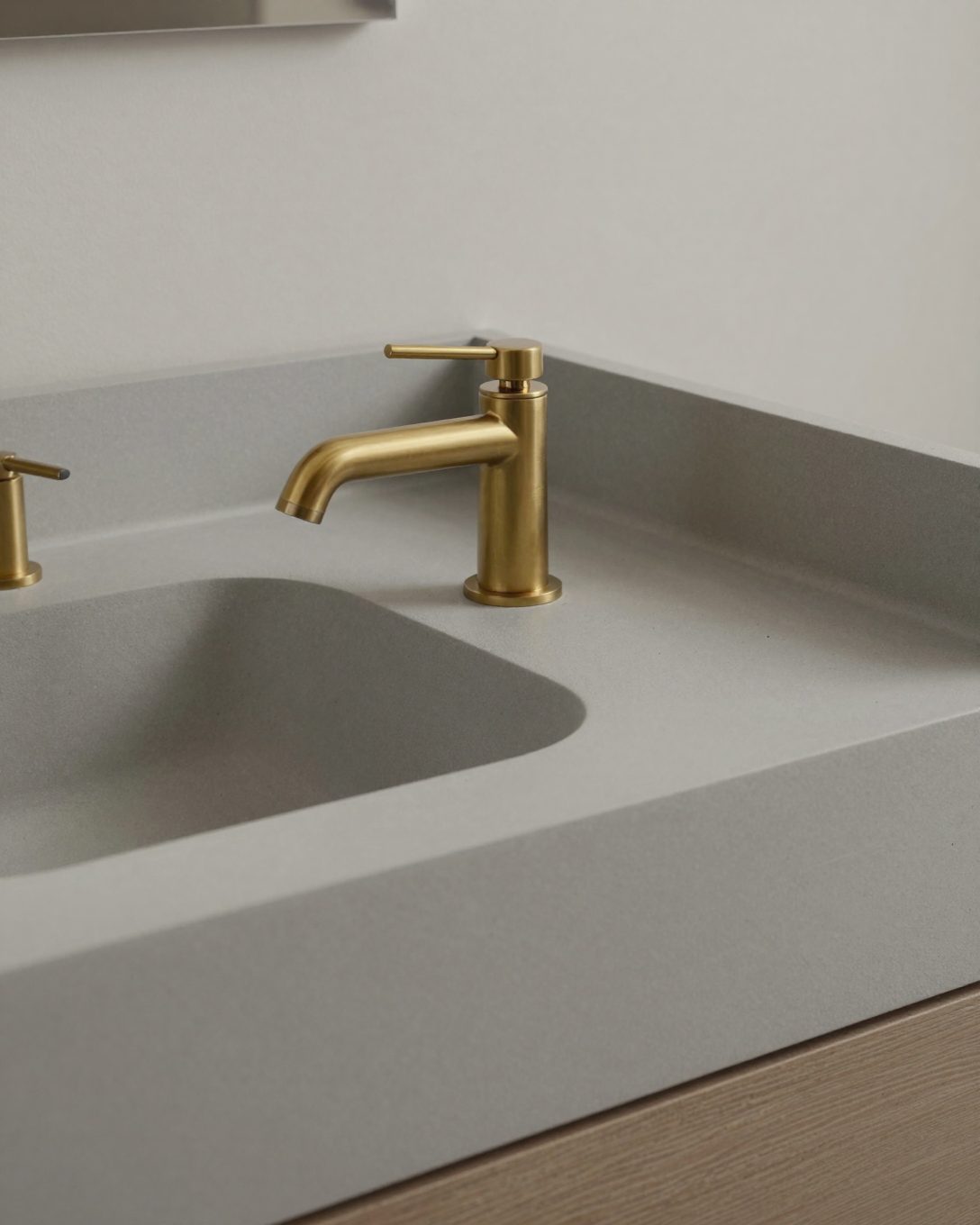
Vanity tops with integrated basins, curved walls and small bathrooms, where the seamless surface makes the room feel larger. The HIA's 2026 Australian Bathroom Design winner, Studio Minosa, used microcement as a tactile, low-maintenance finish with large-format porcelain in the wet areas.
What to ask an installer
hipages suggests asking how many layers they apply, which sealer they use (and whether it is UV-stable), and whether the price includes preparing the existing surface.
How microcement is applied
Microcement is a thin cement-based coating, a few millimetres thick, applied by trowel in several layers over a prepared surface, then sealed. In a bathroom, it sits over a waterproofing membrane that meets the National Construction Code; the microcement itself is a finish, not the waterproofing. Application usually takes several days, including curing time between coats and before sealing.
Sealing and care
The sealer protects microcement from water, soap and stains. Clean it with a pH-neutral cleaner and a soft cloth, avoid harsh chemicals and abrasive pads, and reseal as the installer recommends, often every few years in a busy shower. Wipe up oils and coloured products quickly.
Cost
Microcement usually costs more per square metre than standard tiles, because it is labour-intensive and needs a skilled applicator. Ask for quotes that include surface preparation, the waterproofing beneath, the number of coats, the sealer and the warranty.
Where microcement works best
Microcement suits feature walls, vanity surrounds, floors in low-traffic bathrooms and showers where a skilled installer and a proper waterproofing system are used. Its seamless finish suits minimalist, Japandi and wabi-sabi bathrooms. It is less forgiving on floors that move, such as some timber floors, and in very busy family bathrooms where scratches and stains are more likely.
Microcement compared with tiles
Tiles are cheaper, easier to repair and familiar to every builder; microcement is seamless, has no grout lines and gives a soft, handmade look. A chipped tile can be replaced; damaged microcement needs patching by the installer, which can show. Many bathrooms combine the two: microcement walls with tiled shower floors, or tiles with a microcement vanity.
What designers like and dislike
Designers like microcement for its seamless, soft, handmade look; the way it wraps walls, floors and vanities in one surface; and how well it suits calm, minimal and Japandi bathrooms. They dislike that its quality depends heavily on the installer, that repairs can show, that it needs resealing, and that some products scratch or stain more easily than porcelain. Most designers recommend it only with an experienced applicator and a proven waterproofing system beneath, and many use it for walls and vanities while keeping tiles on busy shower floors.
Our short answer
Microcement is a thin, seamless cement-based finish that can look beautiful in bathrooms over a proper waterproofing system, applied by a skilled installer and resealed as needed. It costs more than tiles and needs more care, but gives a look tiles cannot.
Microcement on floors
On bathroom floors, microcement must sit on a stable, well-prepared base over the waterproofing, with falls to the drain built into the base, not created by the coating. Choose a product and a sealer rated for floors, and ask the installer about slip resistance when wet; some finishes need an anti-slip additive in the sealer. Floors take more wear than walls, so expect to reseal them more often.
Choosing an installer
Ask how many microcement bathrooms the installer has completed, to see recent work in person, which product system and waterproofing they use, how many coats they apply, how long each stage takes, and what warranty covers cracking, peeling and staining.
Common questions
How much does microcement cost per m2 in Australia?
About $200 to $500 per square metre plus GST, according to hipages; bathrooms sit higher than floors.
Is microcement waterproof?
Not on its own. In a shower it needs a waterproofing membrane underneath and a sealer on top, installed to AS 3740.