Journal / Costs
Bathroom renovation cost in 2026: a line-by-line way to check a quote
Words by the Bathroom Edit editor · Updated on 8 October 2026 · 8 min read
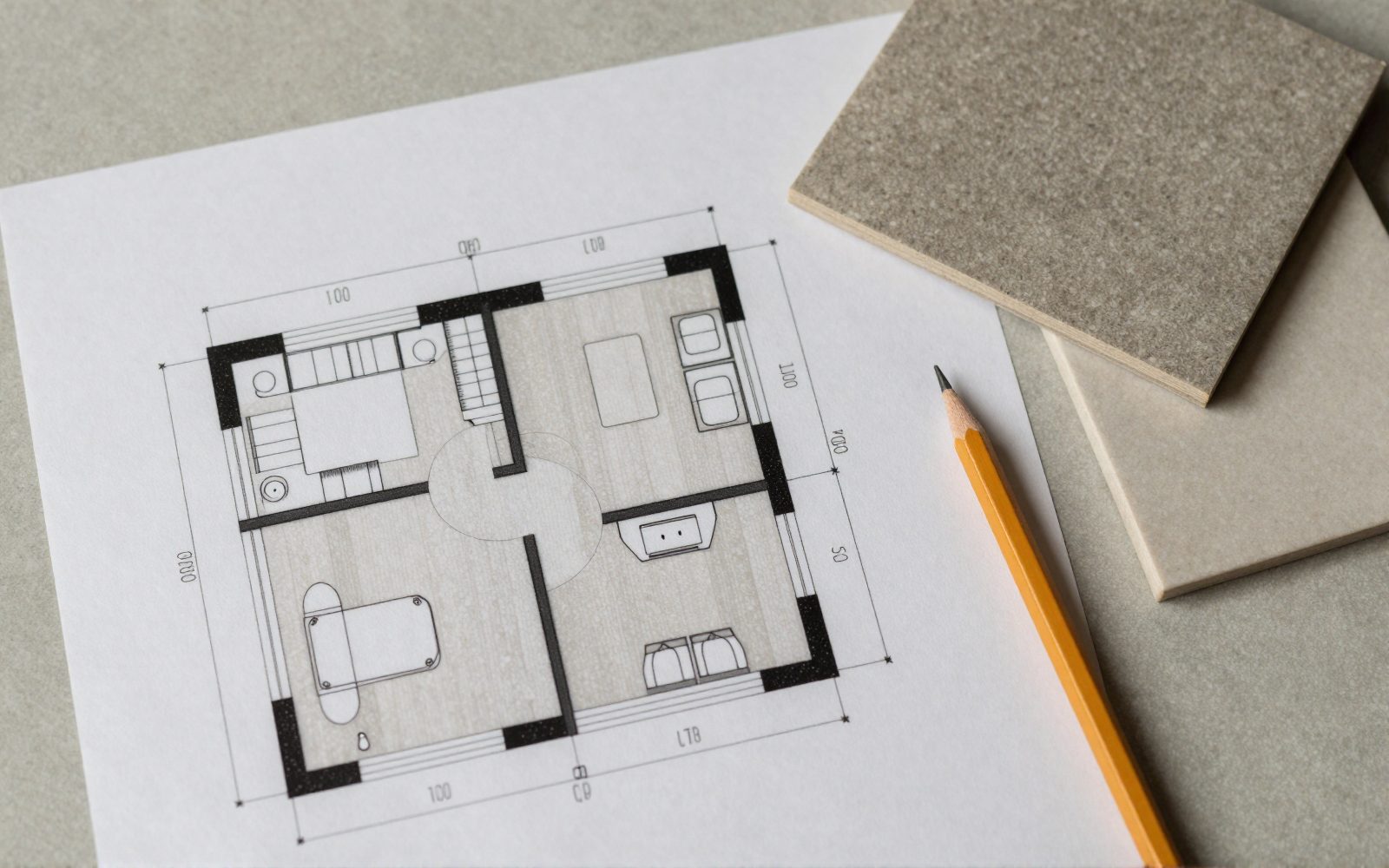
Published 2026 estimates put a budget bathroom renovation at $8,000 to $15,000, a standard one at $15,000 to $35,000, and a premium one above $35,000, with an average spend around $26,000. Your quote depends on size, how much is moved, and finishes. In NSW, work over $5,000 needs a written contract and a licensed contractor; over $20,000 also needs home building compensation cover.
A bathroom renovation in Australia in 2026 typically costs $8,000 to $15,000 for a budget job, $15,000 to $35,000 for a standard one and more than $35,000 for a premium one, according to OpenAgent's September 2026 guide, which cites Housing Industry Association data putting the average spend around $26,000. What moves your price most is whether the layout changes, the size of the tiled area and the fixtures you choose.
The three bands
| Band | Published 2026 range | What usually separates it |
|---|---|---|
| Budget | $8,000 to $15,000 | Same layout, standard tiles, off-the-shelf vanity and screen |
| Standard | $15,000 to $35,000 | Some plumbing moved, better tiles, wall-hung fixtures, more storage |
| Premium | Over $35,000 | Layout changes, large-format or natural stone, custom joinery, freestanding bath |
These are published ranges, not quotes. Prices vary between regions and between builders for the same job.
Itemise the quote
Ask every builder to price the same lines. A single total hides the difference between a cheap quote and an incomplete one.
| Line | What it covers | Figures repeated by OpenAgent; not verified current quotes |
|---|---|---|
| Demolition and disposal | Removing old tiles, fixtures and lining; skip bin | Ask for a line price |
| Plumbing | Rough-in, drains, final fit-off | Plumbers $100 to $150 an hour |
| Electrical | Lights, exhaust fan, power for heated rails or a bidet seat | Electricians $80 to $100 an hour |
| Waterproofing | Membrane to the building code's wet-area requirements, by a licensed waterproofer where required | Ask for a line price and the product used |
| Tiling labour | Floor and walls, per square metre | $45 to $150 per m² |
| Tiles | Supply | $30 to $55 per m² budget; $80 to $130 per m² higher quality |
| Vanity | Supply | About $467 for a 900 mm wall-hung to $1,360 for a 1,200 mm wall-hung, as published |
| Toilet | Supply | About $120 basic, $400 standard, up to $1,200 premium |
| Shower screen | Supply | About $300 basic to $690 for a three-panel sliding screen |
| Bath, if any | Supply | $200 to $1,000 budget; $2,000 to $5,000 mid-range; $5,000 to $10,000 premium |
| Tapware, accessories, mirror, lighting | Supply | Ask for an allowance and what it buys |
Some component figures in the September 2026 guide come from older studies, including a 2024 tiling study. They are context for checking scope, not fresh supplier prices. Get dated local quotes before budgeting.
If a quote lists a "PC" or "provisional sum" for an item, it is an allowance, not a price. The final cost goes up if you choose something dearer.
A worked tiling example
Tiling is where quotes differ most. Take a small bathroom with 6 m² of floor and 20 m² of wall tiling (an illustrative figure; measure your own), so 26 m² in all.
| Low end | High end | |
|---|---|---|
| Tiles, 26 m² | 26 × $30 = $780 | 26 × $130 = $3,380 |
| Tiling labour, 26 m² | 26 × $45 = $1,170 | 26 × $150 = $3,900 |
| Tiles plus labour | $1,950 | $7,280 |
The same room's tiling alone can differ by more than $5,000 depending on tile choice and labour rate, before allowing for wastage, which adds to the tile quantity. Tiling full-height walls instead of a lower band raises the area, and the cost, quickly.
NSW rules that protect you
Under the NSW Home Building Act, as set out by NSW Fair Trading:
| If the job is worth | You need |
|---|---|
| More than $5,000 | A written contract and a contractor licensed by NSW Fair Trading |
| More than $20,000 | A full written contract and evidence of home building compensation cover before you pay anything, including a deposit |
| Any amount | A licensed plumber for plumbing and a licensed electrician for electrical work |
The deposit cannot be more than 10 per cent of the contract price. Use the Service NSW licence check and verify that the licence covers the actual work. Building Commission NSW lists 13 27 00 for its current consumer resources.
How long it takes
A straightforward bathroom with the same layout commonly takes a few weeks of site time, because trades have to follow each other in order: demolition, plumbing and electrical rough-in, waterproofing and its curing time, tiling, then fit-off. Moving plumbing, waiting on custom joinery or ordering imported tiles extends it. Ask each builder for a written schedule and what happens to the price and timing if they find rot or damage behind the old tiles.
Ways to keep the cost down
- Keep the layout. Leaving the toilet, shower and basin where they are avoids most new plumbing; see our bathroom layout guide for what can change cheaply.
- Tile less. A tiled splash zone and painted walls elsewhere uses fewer square metres.
- Choose standard sizes. Off-the-shelf vanities and screens cost less than custom.
- Decide before the job starts. Changes once work begins are the most expensive kind.
For the open, level-floor shower that many people want, and the code rules behind it, see wet room bathrooms.
Can you renovate a bathroom for $5,000 or $10,000?
OpenAgent's published budget band starts at $8,000, so $10,000 sits within that broad guide and $5,000 does not. Neither figure proves a complete renovation is possible in your home. List what the job includes: demolition, plumbing, electrical work, waterproofing, tiling, fixtures and disposal. A cosmetic refresh that retains sound surfaces and services is a different scope from rebuilding the room. Ask for an itemised fixed scope rather than relying on a headline budget.
What changes the price most
The biggest cost drivers are the size of the room, whether the layout changes, the condition of what is behind the walls and floor, the quality of fixtures and finishes, and who manages the job. Moving the toilet, shower or vanity means moving drains and pipes, which often costs more than any single fixture. Full-height tiling and large-format tiles add labour. Custom vanities, stone tops, frameless glass and premium tapware add materials. Older homes can hide rotten floors, failed waterproofing and asbestos.
Comparing quotes fairly
Ask each builder to price the same scope, with the same fixtures or clear allowances, and to list demolition, plumbing, electrical, waterproofing, tiling, fixtures, finishing and waste removal separately. Check that each includes the waterproofing certificate, the warranty and the timeframe. A much cheaper quote often excludes something, such as waterproofing to the full required height or the removal of old tiles.
Paying for the work
In NSW, deposits for residential building work are limited by law, and contracts over set thresholds need specific terms and insurance. Pay progress payments for work completed, not in advance. Keep receipts and the contract with your home records.
Budgeting for surprises
Set aside a contingency, often 10 to 15 per cent, for problems found after demolition. Common surprises include rotten floor framing under an old shower, corroded pipes, uneven walls that need sheeting and asbestos in older sheeting. Settle your design before work starts, because changes during the job are among the most expensive extras.
A sample timeline
A standard bathroom renovation usually follows this order over a few weeks: demolition and removal in the first days; plumbing and electrical rough-in; framing and sheeting; waterproofing, then curing; screeding and tiling; fit-off of vanity, toilet, tapware and lights; then the shower screen, which is measured after tiling and installed later. Delays often come from waiting for the waterproofing to cure, for custom glass, or for special-order fixtures, so order them early.
Getting value
Value comes from spending where it matters most: waterproofing done properly, a good shower, enough storage and good lighting. Save on features that are easy to change later, such as accessories and mirrors. Keep the layout if it works, and choose standard sizes for tiles, vanities and screens.
Our short answer
Most bathroom renovations in 2026 fall into a budget, mid-range or premium band depending on size, layout and finishes. Get itemised quotes, compare them line by line, check licences and insurance, keep a contingency, and order long-lead items early.
Signs a quote is too low
A quote far below others may leave out waterproofing to the required heights, the removal and disposal of old tiles, the electrician's work, or allowances for fixtures; it may also assume the floor and walls are perfect. Ask what is excluded, and get it in writing. A licensed builder with insurance and a clear contract is worth paying a fair price for.
Costs by bathroom type
Powder rooms cost the least because they have no shower, little waterproofing and a small area.
Ensuites are usually smaller than main bathrooms but carry the same trades, so their cost per square metre can be higher.
Main bathrooms cost more overall because of their size, the bath, and often full-height tiling.
Accessible bathrooms can cost more because of level-entry showers, wider doors, grab rails and specific fixtures, though planning these in a renovation is far cheaper than adding them later.
Doing parts yourself
Owners can save by doing demolition, painting and installing accessories, but plumbing, electrical work and waterproofing must be done by licensed trades, and tiling a wet area well takes skill. Check with your builder which tasks you can take on without affecting warranties.
Questions to ask before you sign
- What exactly is included, and what is excluded?
- Who does the waterproofing, and will I get a certificate?
- What are the allowances for tiles and fixtures, and what if I choose dearer ones?
- How are variations priced and approved?
- What is the payment schedule?
- What is the start date and the expected finish?
- What warranty applies, and how do I report a defect?
- Can I see the builder's licence and insurance?
When a makeover is enough
If the waterproofing is sound and the layout works, a makeover can cost a fraction of a renovation: new vanity, tapware, mirror, lights, regrouting and silicone, and paint. Ask a builder or plumber to check for leaks before deciding, because a makeover over failed waterproofing wastes money. Signs of failure include loose or hollow tiles in the shower, water stains on walls or ceilings nearby, and persistent mould.
Keeping track during the job
Keep a simple record as the job runs: the contract and each variation approved in writing, the dates of each stage, photos of the waterproofing before tiling, and receipts. If a question comes up later about what was agreed or built, this record settles it quickly, and it helps if you ever need to make a warranty claim.
Sources
- OpenAgent, How much does a bathroom renovation cost in Australia (updated 17 September 2026; cites HIA average)
- NSW Government, Contracts for residential building work
- NSW Fair Trading, Home building contract for work $5,000 to $20,000 (PDF)
- Australian Building Codes Board, NCC 2022 Housing Provisions Part 10.2 Wet area waterproofing